
For anyone on the leadership team: Transmitter designs AI production systems so the shop can build better and faster.
Partners, operators, account leads, and strategy leads. Run the system in the shop, sell it under your brand, or bring a client who needs the work managed.
A ChatGPT subscription and a few enthusiastic users will not fix yesterday’s production work.
Without structure, AI becomes disconnected experiments. Teams try different tools. Standards vary. Nobody can tell whether the work is actually getting better. The operational pain stays the same:
- Client context gathered again for every brief
- Work copied between all the different tools across your entire team
- Outputs rewritten because they miss the client’s voice
- Quality checked by hand before every delivery
- Critical workflows stuck on one technical employee
- Headcount rising every time client volume rises
Transmitter designs the production systems that let your team build better and faster.
Each example below is a production system built around an agency’s existing tools and workflows. Your team can run it internally or offer it to clients.
Client knowledge
Your team runs it, or you brand it and sell it to a client.
- Client, brand, and market knowledge in one place
- Account name to meeting brief, discovery questions, and objection prep
- Approved work into reports, newsletters, alerts, and next steps
Proposal engine
Sales uses it internally, or you sell faster, consistent proposals as a service.
- Pricing, services, and quality rules in one place
- Faster proposals, tighter consistency across the team
- Review stays on the offer, not on hunting the latest rate card
Campaign delivery
In-house production, or white-label when you sell the service.
- Web, ad, email, and social variants from one locked master
- Each output checked against format, crop, quality, and metadata
- Lineage back to source so the agency can prove what shipped
Guardrails first. Then speed.
AI can help a team do more. The tradeoffs have to be understood and managed, with someone responsible for the outcome. Every system we design makes those decisions explicit.
- Approved source material
- Where human review matters
- Permission-controlled actions
- Structured outputs and validation
- Quality, security, and responsible-use rules
- Logs, exceptions, and recoverable failures
- Cost controls
- Documentation and named ownership
Evals and security in production
- Brand-voice evals against the client’s character traits before a draft is usable
- Source-linked answers: retrieval has to cite the client knowledge base
- Destination evals: format, crop, quality, and metadata have to match the spec
- Client-scoped isolation so one account cannot see another client’s knowledge
- Client data stays private — not used to train external models
- Email, chat, and Telegram sends wait on named human approval
Process
We work with your team, starting with one workflow
-
Choose it
Pick the process worth improving: the one that wastes time, varies by person, or blocks revenue.
-
Build around what works
Map the trigger, data, tools, approvals, and output. Keep the workflows your team already trusts.
-
Set the guardrails
Define quality, security, responsible use, and where a human has to review before anything goes to a client.
-
Prove it
Test against real examples. Measure the result against a practical goal, not a demo moment.
-
Own it, then refine
Document the system, train the people responsible, and improve it as the work and the tools change.
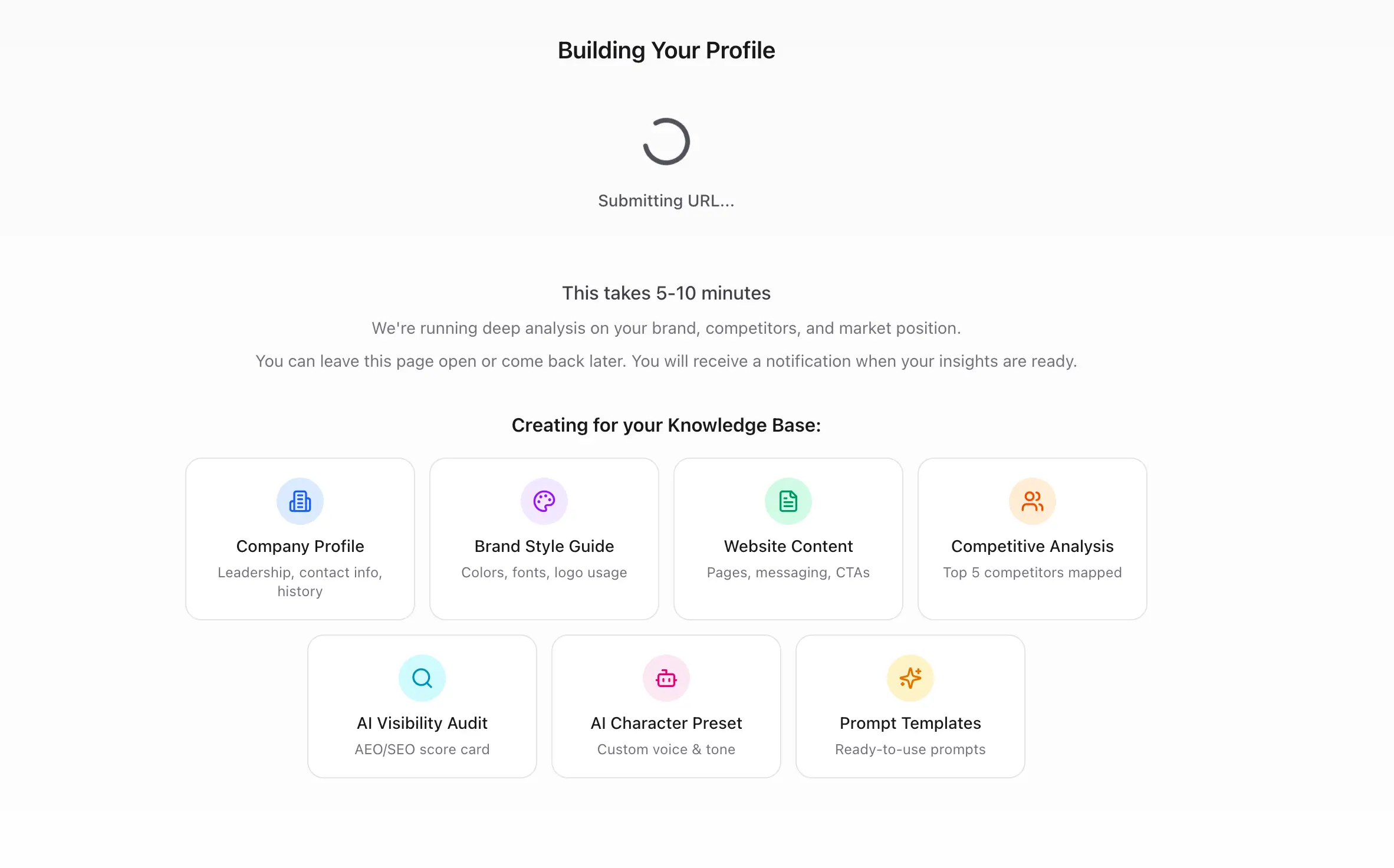
Human dnAI profile builder: brand, offer, and client knowledge locked before anything generates.
Turn one existing workflow into a production system your team owns.
Stop gathering client context again, copying work across tools, fixing off-brand rewrites, and routing every technical issue through one employee. Centralize account knowledge, briefs, discovery, reports, and proposals around the tools your team already uses. Run the system internally or deliver it under your agency’s brand.
Build campaign outputs from one locked master, with format, crop, quality, and metadata checks before delivery. Approved sources, client-scoped data, evaluations, and a named human reviewer protect quality. Start with one workflow, then scale volume without matching it with headcount.
Book AI Strategy Session · $250. Map one workflow your team already runs, including its trigger, sources, approval owner, and output.
Build better. Deliver faster.
We design the production system around tools you already trust. Clearer quality, named review, more client work without a matching hire. Book AI Strategy Session · $250 is the first step.
Book AI Strategy Session · $250