
This Motioneer and Hands Editorial rebuild makes existing work easier for people and AI agents to find, understand, cite, and book.
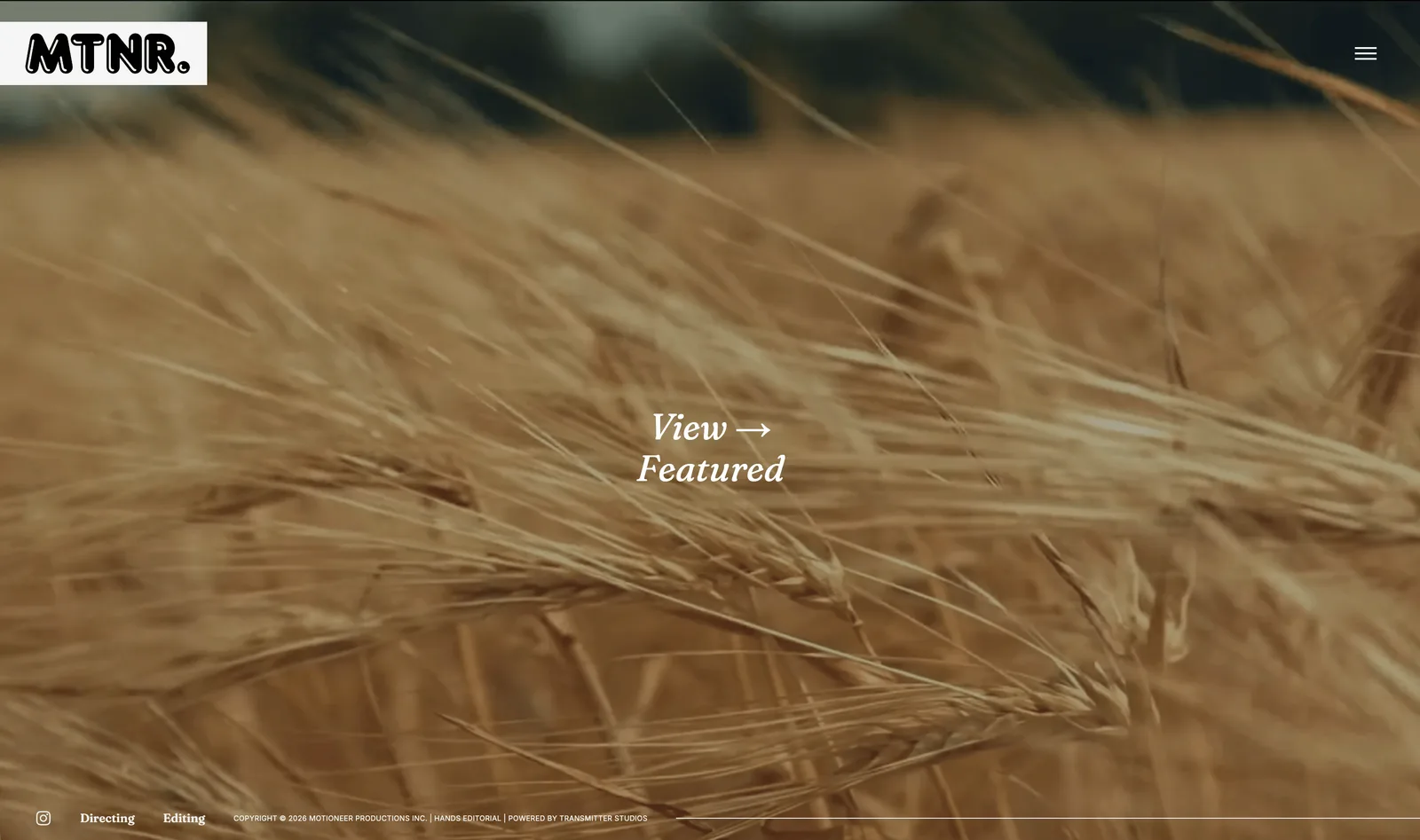
Two production brands. One discovery problem.
The work was already there
Motioneer had 19 projects across four categories: Director Reel, Featured, Commercial, and Documentary. Hands Editorial had 12 project profiles, audience pages, and booking on every page.
Both sites already held years of work, credits, stills, videos, and category links. The rebuild had to keep that detail while making the sites faster and easier to read.
Keeping the project details connected
Every project page needed to keep its media, embeds, categories, and credits. Projects in more than one category had to stay available through each one.
WordPress extraction was one step in the rebuild. The finished site uses structured records, local assets, and clear pages designed for people and AI agents.
Keep every project relationship
We retained each project’s stills, video embeds, credits, dates, and category memberships. Featured commercial work, for example, remains listed in both categories.
We first extracted the content into verified records. We then designed and built the new sites from those records instead of reusing page-builder markup.
Structure the content before rebuilding the site
Transmitter converted both sites into structured records covering pages, projects, categories, media, embeds, and canonical paths. The templates use those records. The public sites do not call a CMS at runtime.
This structure gives visitors and AI agents clear routes through projects, categories, media, credits, and related work.
Details retained in the rebuild
- Project titles, excerpts, and credits
- Featured stills and locally stored media
- Vimeo and self-hosted video embeds
- Membership across multiple categories
- Published dates used in schema and sitemaps
- Canonical paths carried into the live rebuild
Motioneer. Cinematic work that remains easy to find.
Motioneer’s website has been through six iterations over 20 years. We rebuilt it around the reel, so producers can move from a reel to project pages with credits and stills, then book Motioneer director JR Reid. Years of work now support new business instead of sitting behind a theme.
The work
- 19 project profiles with credits, stills, and embeds
- Four categories: Director Reel, Featured, Commercial, and Documentary
- Projects can appear in every category they belong to
- Dedicated home, about, and contact pages
Why the structure matters
A producer watches the reel, opens the project that matches the brief, and books JR from that URL. Credits and stills stay attached so the page can be shared as proof.
Projects can appear under Director Reel, Featured, Commercial, and Documentary as needed. Featured commercial work stays in both Featured and Commercial.
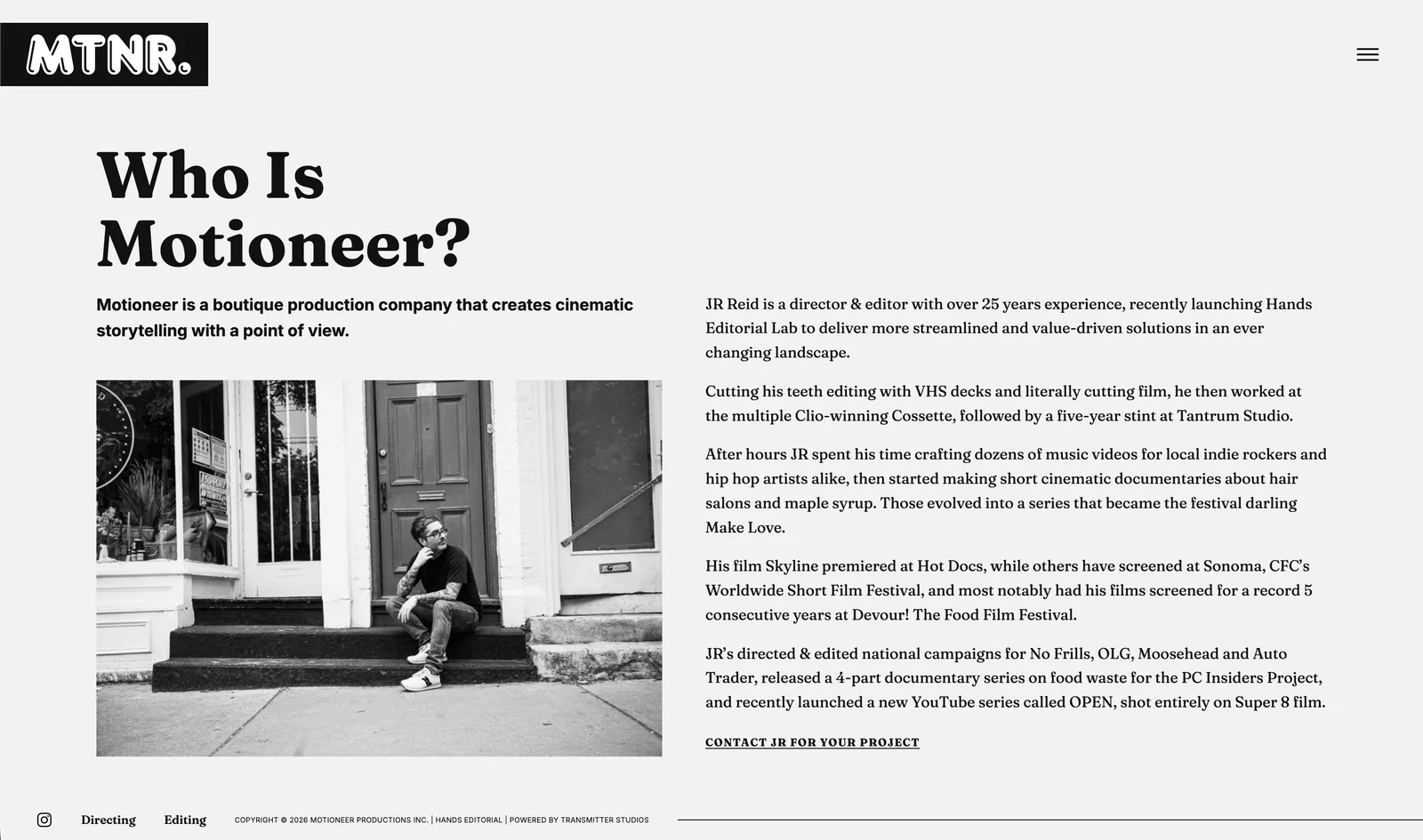
Hands Editorial. Project pages agencies can share.
Hands Editorial is JR Reid’s commercial editorial practice. An agency producer can open a cut, see the credits, and book from that page. Years of cuts now support new business instead of sitting in a portfolio pile.
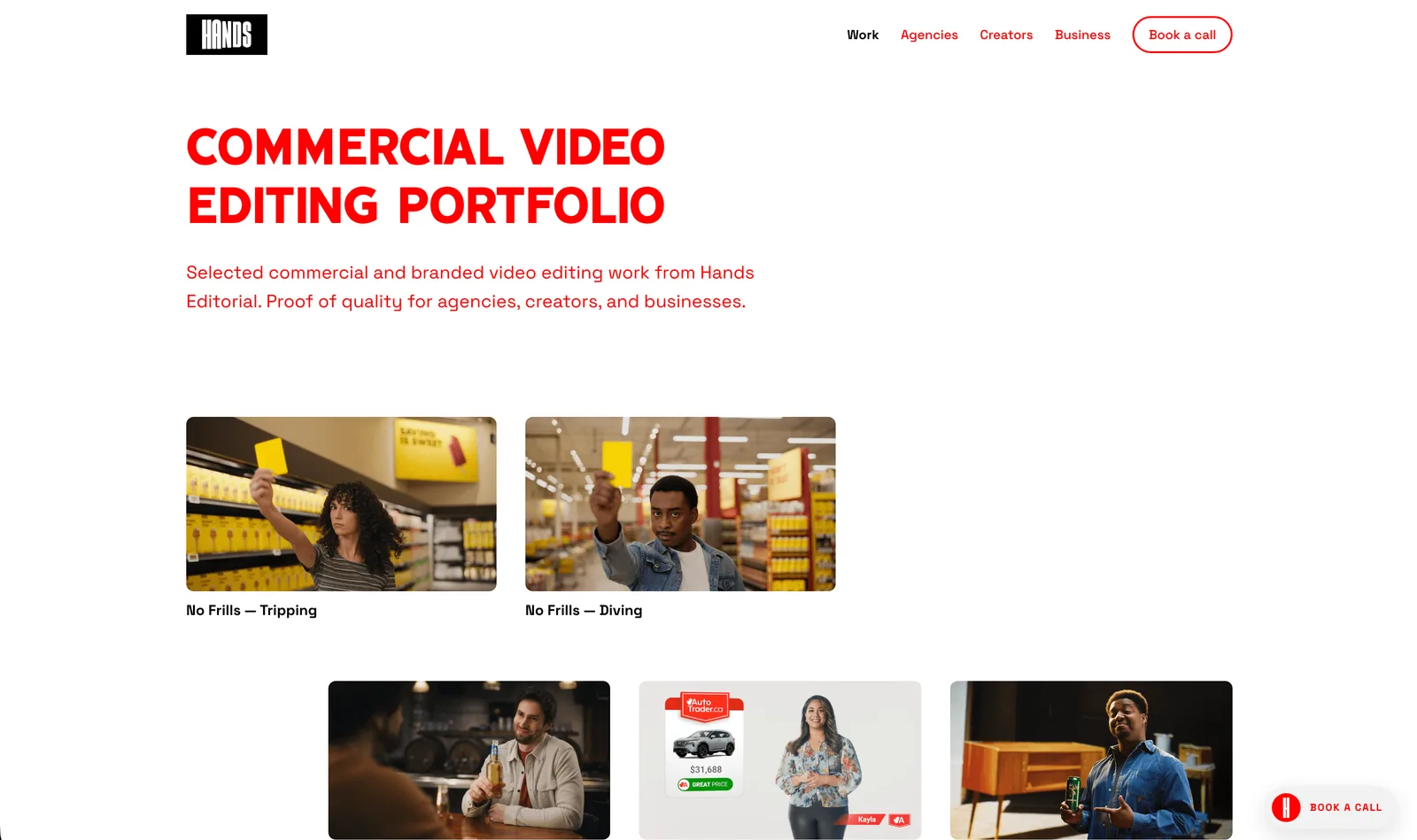
We retained 12 commercial project profiles with their stills and embeds. Service pages now reflect how the studio gets hired: overflow editorial, creator versioning, and campaign delivery.
The work
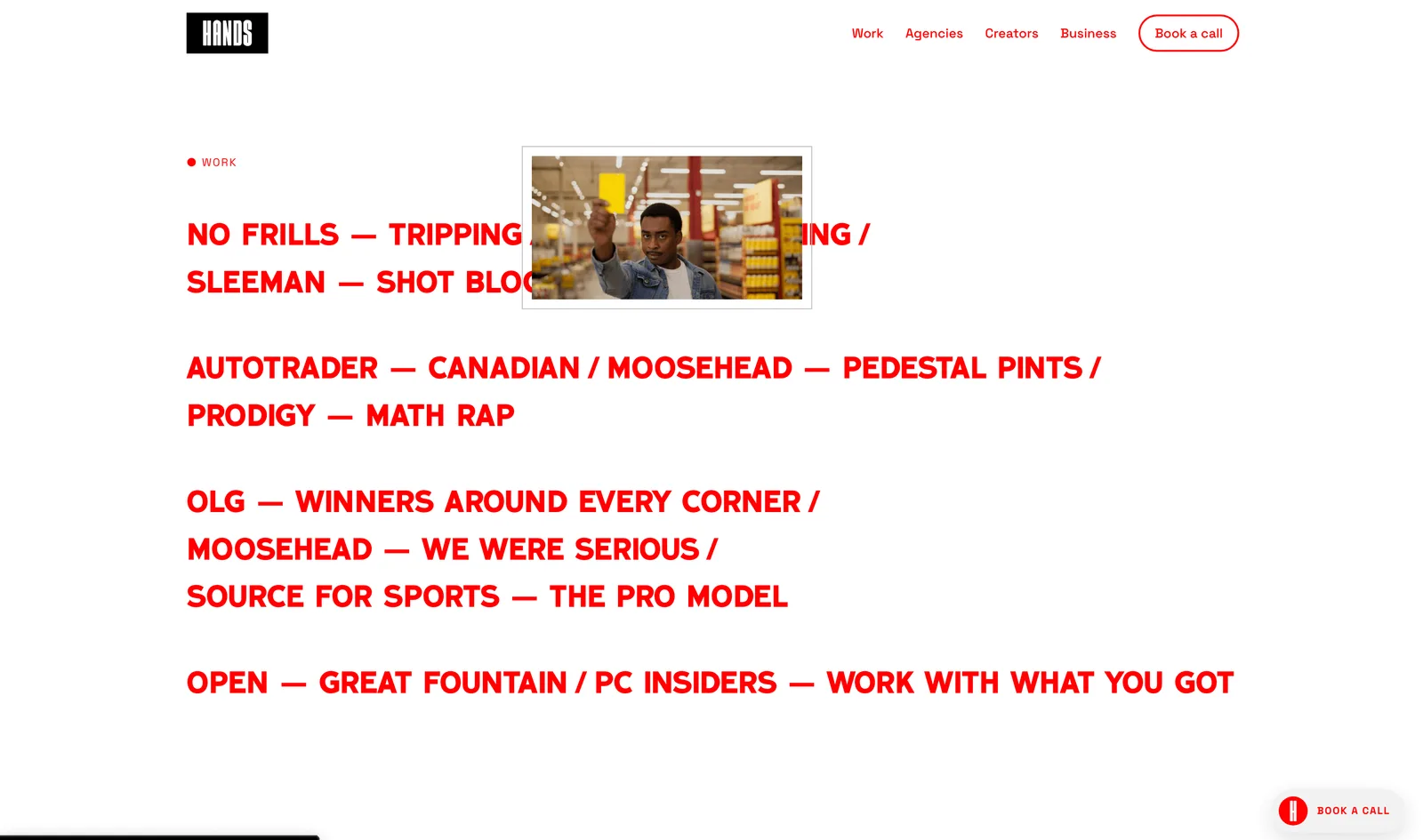
- Project pages with credits and featured stills
- Dedicated pages for agencies, creators, and businesses
- A portfolio hub linking to specific cuts
- Booking available on every page
How these sites work for agents
People can watch the reel as intended. Agents can search the project catalog, cite specific work, and find the correct booking route.
Consistent project records
Each project has a stable record containing its slug, credits, media, and canonical URL. Page templates use those records to render the site.
- Project IDs remain consistent across rebuilds
- Media uses local paths rather than CMS hosts
- Category membership is stored as project data
Machine-readable discovery
Both sites publish machine-readable resources that send agents to the correct page on the first pass.
- Sitemaps with live canonical URLs, so a project can be found
- llms.txt with project-level links, so a project can be cited
- MCP catalogs for Motioneer and Hands, so an agent can ask for the right page
- .well-known/mcp.json, so agents discover those catalogs
Clear routes to contact
Every discovery route leads to a practical next step for producers and agency producers.
- Motioneer’s contact route for JR Reid
- Hands booking available on every page
- Individual project URLs that agencies can forward
Built to the same performance standard as our own site.
Both sites are static and self-hosted. Our first checks cover responsive layouts, deferred video, cover images that load before video, self-hosted fonts, and complete page metadata.
The public sites run without a CMS or page builder at runtime. Stills handle the first paint. Video loads when viewport size, motion preferences, and data-saving settings permit it.
Performance
- Poster-first hero sections
- Deferred desktop video
- Responsive stills with explicit dimensions
- Self-hosted type
Discovery
- Unique page titles and descriptions
- Canonical URLs and Open Graph metadata
- JSON-LD on every indexable route
- llms.txt, agents.txt, and MCP catalogs
Before
- Page-builder markup included in public HTML
- Media tied to a CMS host
- Project relationships vulnerable during rebuilds
- No agent catalog for individual projects
- Hard to share one project and book from it
After
- Static pages generated from structured project records
- Local assets with existing embeds preserved
- Category and credit relationships retained
- Project-level citation paths for agents
- Shareable project URLs with a booking path
FAQ
Why does an agent-ready website matter now?
People increasingly use AI assistants alongside search to find providers, assess experience, and make contact. Agents can only recommend businesses they can discover, understand, and verify. Clear services, project details, proof, and contact paths improve your chances of being included in relevant answers.
What happens to my existing content, URLs, and search visibility during the rebuild?
We inventory every page, project, credit, media file, category, embed, and historical URL before rebuilding. Existing paths are preserved where appropriate, and moved content is mapped to its replacement. Nothing goes live until content, media, and URL coverage are verified.
Why does this need ongoing AI support?
Your work changes, and discovery systems continue to evolve. Dedicated AI support keeps projects, credits, metadata, structured data, agent catalogs, and contact paths current. This maintains your website’s AI readiness and strengthens its value over time.
An agent-ready website turns years of work into proof that supports new business.
For Motioneer, the rebuild replaced years of theme-bound markup with a clear structure for 19 projects across four categories. The reel can now represent the studio to prospective clients and to agents that read the same pages.
For Hands Editorial, 12 commercial project profiles now give each cut a context and a booking path. A page can turn interest into an enquiry.
If your studio, editorial shop, or agency is sitting on years of work, the same approach makes that experience easier to find, understand, cite, and act on. The site becomes a business-development asset for people and agents.
See the finished sites at motioneer.ca and handseditorial.com, then ask whether your own site gives your best work the same chance.
Get your site ready for the agentic web.
Let’s structure your site so people and agents can find the right page, understand it, navigate it, and take the next step.
Book a Call